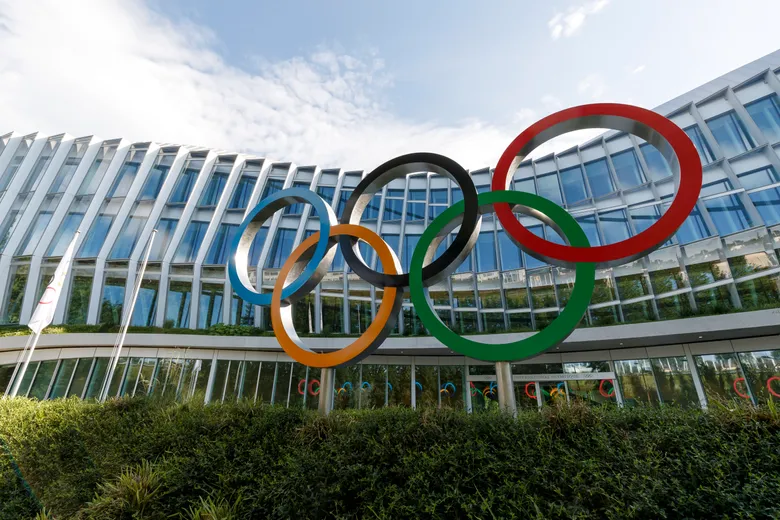
LAUSANNE, SWITZERLAND — The International Olympic Committee (IOC) has announced a major change to its athlete eligibility rules, confirming that transgender women will be excluded from competing in the female category at the Olympic Games starting with the 2028 Summer Olympics in Los Angeles. The new policy, unveiled on Thursday, introduces a uniform eligibility standard across all Olympic sports and replaces the previous system that allowed individual federations to set their own rules.
New Eligibility Rules for Women’s Events
Under the revised guidelines, participation in any female category at Olympic and IOC-sanctioned events will be restricted strictly to biological females.
A central component of the policy is the introduction of mandatory genetic testing. All athletes competing in women’s events must undergo a one-time SRY gene screening, a test used to detect the presence of the SRY gene typically located on the Y chromosome, which plays a key role in male sex development.
According to the IOC, the screening will be conducted once during an athlete’s career and will determine eligibility for participation in women’s competitions at the Olympic level.
The rule will apply to all individual and team sports governed by the IOC, but it will not apply retroactively. It will also not affect grassroots, community, or recreational sporting programs.
Alternative Competition Options
Athletes who test SRY-positive will not be barred from the Olympics entirely. Instead, they will remain eligible to compete in:
- The male category
- Mixed categories in designated male slots
- Any open categories created by international sports federations in the future
The IOC said these pathways are intended to maintain participation opportunities while preserving what it describes as competitive fairness in women’s sports.
Scientific and Ethical Rationale
The IOC said the decision followed extensive scientific reviews conducted by medical experts advising the organization.
According to the committee, evidence suggests that hormone therapy cannot fully eliminate physiological advantages developed during male puberty, including higher muscle mass, bone density, strength, and endurance capacity.
The Committee said the policy aims to protect the fairness, safety, and integrity of the female category, particularly in sports where physical differences could influence competitive outcomes.
Another motivation behind the change was the need for global consistency. Previously, eligibility rules varied widely between sports federations, creating what the IOC described as a fragmented and confusing system.
Leadership Behind the Policy
The decision was strongly backed by IOC President Kirsty Coventry, who described the move as necessary to safeguard women’s competition.
In the official announcement, Coventry said:
“It is absolutely clear that it would not be fair for biological males to compete in the female category. The policy that we have announced is based on science and has been led by medical experts.”
She added that protecting the female category remains the organization’s top priority.
“We have to protect the female category, first and foremost, to ensure fairness.”
Medical guidance supporting the policy was provided by the IOC’s Director of Health, Medicine and Science, Jane Thornton. Thornton advised IOC members that current evidence shows hormone therapy cannot fully negate physiological advantages gained during male puberty.
Alignment Ahead of the 2028 Games
The IOC said the rule change also ensures policy alignment with regulations in the United States ahead of the Los Angeles Games. The approach mirrors aspects of the U.S. executive order known as “Keeping Men Out of Women’s Sports,” which focuses on protecting women’s athletic categories.
The policy will come into force in time for athlete qualification cycles leading to the 2028 Olympics, giving international federations and national committees several years to implement the new eligibility framework.
Global Debate Expected
The announcement is expected to intensify the ongoing global debate over fairness, inclusion, and gender identity in elite sport. While some athletes and advocacy groups have long argued that restrictions are necessary to ensure fair competition for women, others believe such policies could limit participation opportunities for transgender athletes.
The IOC has said it will continue to monitor scientific developments and work with sports federations to implement the new rules ahead of the Los Angeles Games.